


Discover Asia's historic treasures
Cruise Circle
From ancient temples to iconic mausoleums
Let's take a look at some of the best historical attractions you can visit on a cruise in Asia...
1. The Grand Palace, Thailand
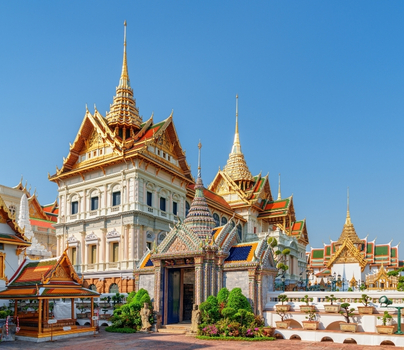
A sprawling complex that covers over 200,000 square metres, the Grand Palace is an architectural masterpiece and one of Bangkok’s most iconic landmarks. Built in 1782, you can explore courtyards, halls and temples, as well as the famous Temple of the Emerald Buddha, a sacred and powerful religious symbol for the Thai people. It’s here you’ll find the Emerald Buddha, which was impressively carved from a single Jade stone and is a must-see when visiting. Other highlights include the Yaksha gate guardians of Wat Phra Kaew, which are over 5 metres tall and accessorised in glittering mosaic tiles, the Chakri Maha Prasat Hall, and the Golden Stupa (to name just a few).
2. Temples of Angkor, Cambodia
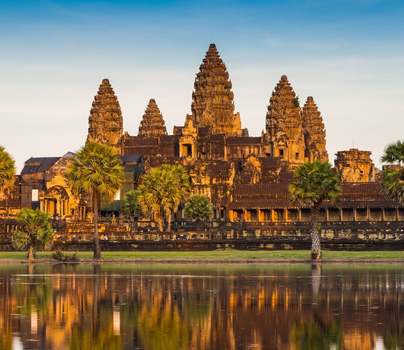
The centre of the Khmer Kingdom for centuries, Angkor is a UNESCO World Heritage Site that covers more than 400 square kilometres. Found deep in the forests of Cambodia’s Siem Reap province, the area is home to countless temples, including the world’s largest religious monument, Angkor Wat. From its magnificent towers to an 800-metre-long series of bas-reliefs that stretch around the central temple complex, which has become a symbol of Cambodia’s rich cultural heritage, even appearing on the country’s flag, and still used as a place of worship today.
Explore Angkor Wat with a stay in Siem Reap before or after a Mekong River cruise.
3. Hiroshima, Japan
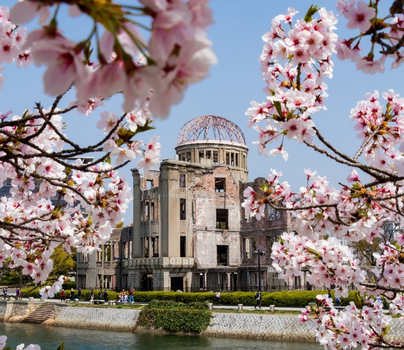
The target of the world’s first atomic-bomb attack, Hiroshima’s name will forever evoke images of the 6th August 1945 tragedy that occurred at the end of World War II. A visit here offers a heartbreaking, haunting and important history lesson, with many opportunities for reflection to be found at the Peace Memorial Park. The long tree-lined Pond of Peace is the park’s central feature, and is where you’ll find the cenotaph – a curved concrete monument that holds the names of all the known victims – and the Flame of Peace. Lit in 1964, it is both a symbol of hope and a protest against the use of nuclear weapons, set to burn until the world’s nuclear weapons are destroyed. The Atomic Bomb Dome, one of the only buildings to have survived the attack, serves as a stark reminder of the horrors of war and the city’s lasting mission for peace.
4. Taj Mahal, India
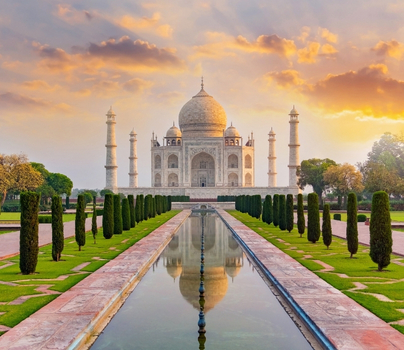
A UNESCO World Heritage site and India’s most famous building, the ethereal Taj Mahal is found in Agra, India. Adorned in white domes and minarets that float serenely above reflecting pools, some 20,000 craftsmen built the all-marble mausoleum at the request of Mughal emperor, Shah Jahan, as a tribute to his dead queen. It remains an unsurpassed monument to eternal love, memorialising Mumtaz Mahal, and is a spellbinding place to experience. Visit on a river cruise where included excursions often allow you to visit the dazzling Taj Mahal twice, at both sunset and sunrise.
Discover river cruises to Agra, India
5. Hirosaki Castle, Japan
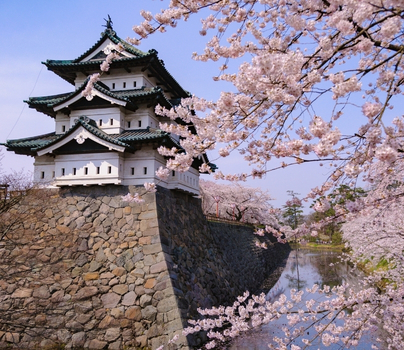
Widely considered to be one of Japan’s most beautiful castles, the Hirayama-style fortress was built in 1611 by Nobuhira, lord of the Tsugaru clan. It also happens to be one of very few originals that was built during the Edo Period (1603-1967), as many of Japan’s castles were dismantled when samurai rule came to and end after 1868, or were burnt down during World War II. Consisting of a three-storey castle tower, fortified moats and yagura towers, the castle sits at the heart of Hirosaki park. Boasting more than 5,000 cherry trees, it’s also the place to be during the months of April and May, when the beautiful pink cherry blossom is in full bloom. It's easiest to visit Hirosaki Castle from Aomori cruise port.